_780x439.png)
The Installation
About // The Challenge
Multisensory experiences help us make sense of the world around us. They ground us in a particular time and place. Tastes and sounds and smells help us remember, and they often determine the quality of our memories. Our senses help us make decisions.
Multilateral climate policy spaces do not invite multisensory engagement. Research takes shape as a report or a memo; and decisions about how natural resources are managed or extracted rely on satellite data. Community groups, especially Indigenous advocates and allies, are asked to leave oral history and collective memory at the threshold of where data-driven decisions get made. But what would we discover if these ways of knowing were valued as equal partners?
Watch the trailer:
Our Intervention
The installation conveys a multitude of datasets through a variety of mediums. By exploring these themes [of conservation, stewardship] across multiple screens and speakers, a surround-sound video triptych is able to bring together a multitude of datasets that have never been seen together before. This merging offers new points of connection and understanding as a complement to data-driven reports and technological interventions.
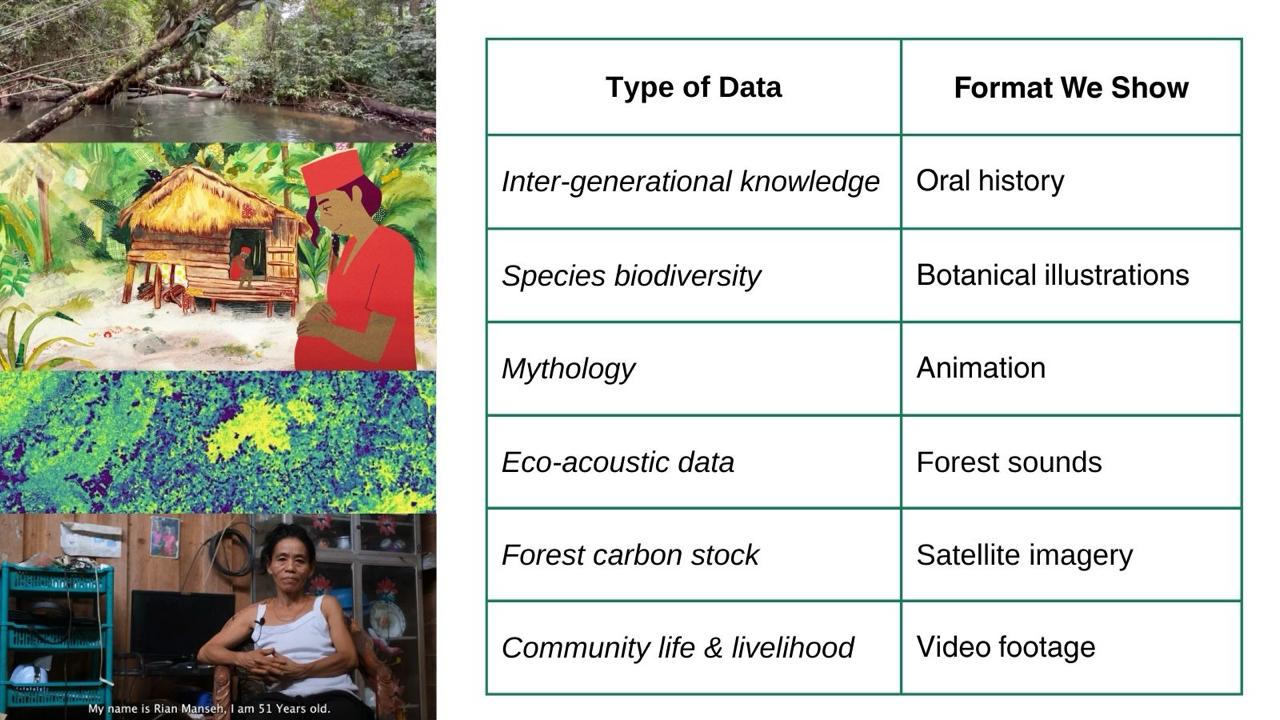
Whereas the data prototype isa technological component for advocacy, the installation isa cultural companion piece that can be screened in climate, educational, and community-oriented venues.
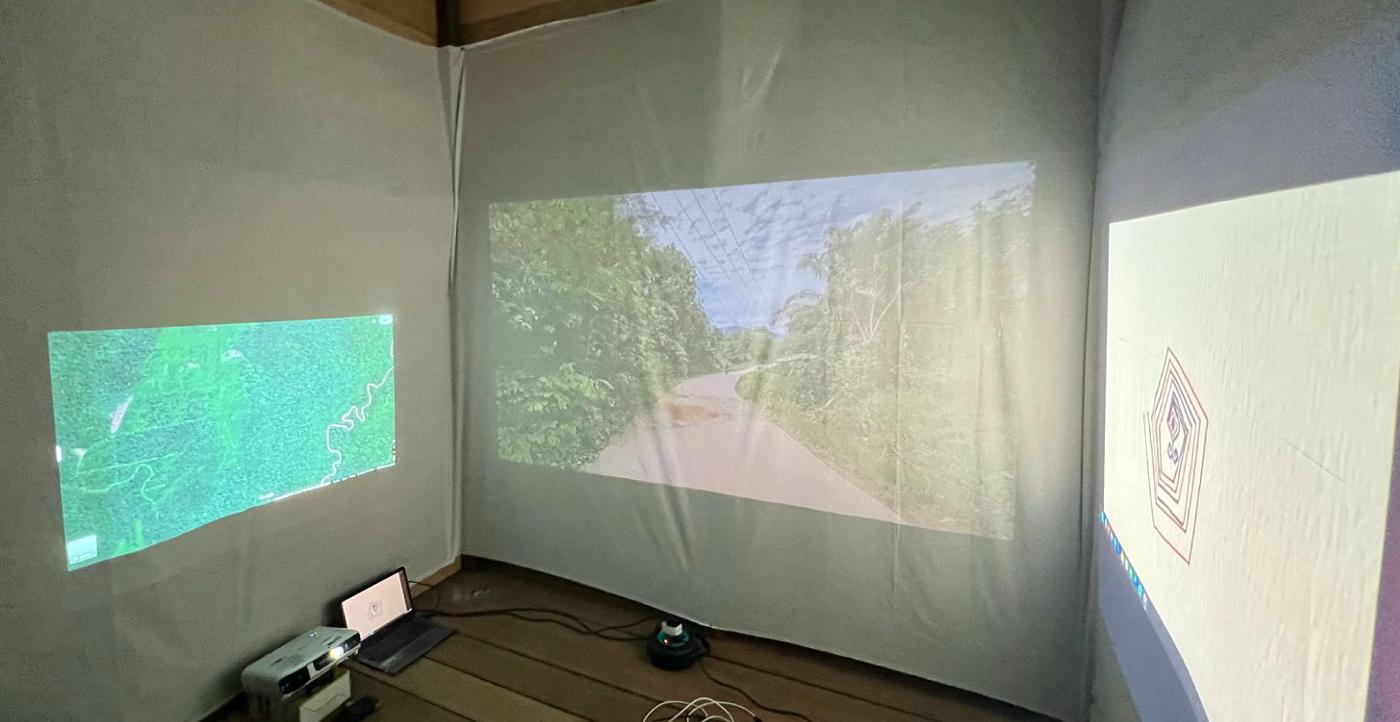
The triptych installation was exhibited in Mekar Raya village on February 18, 2025, followed by a community review and feedback sessions with women, youth and elders. Photo: Michelle Cheripka.
About the Video(s)
The installation centers around the myth of the Dayak snake ancestor, Nabau—brought to life in collaboration with French-Indonesian animator Laura N-Tamara and Japanese CGI artist Masaya Inaba.
This myth tells the story of Nabau’s invitation to the first people to come and build a home in Mekar Raya, and how this land became a place for physical and spiritual healing. Through interviews and oral history, we use this qualitative data as an anchor for other datasets that were collected and cultivated around Mekar Raya village.
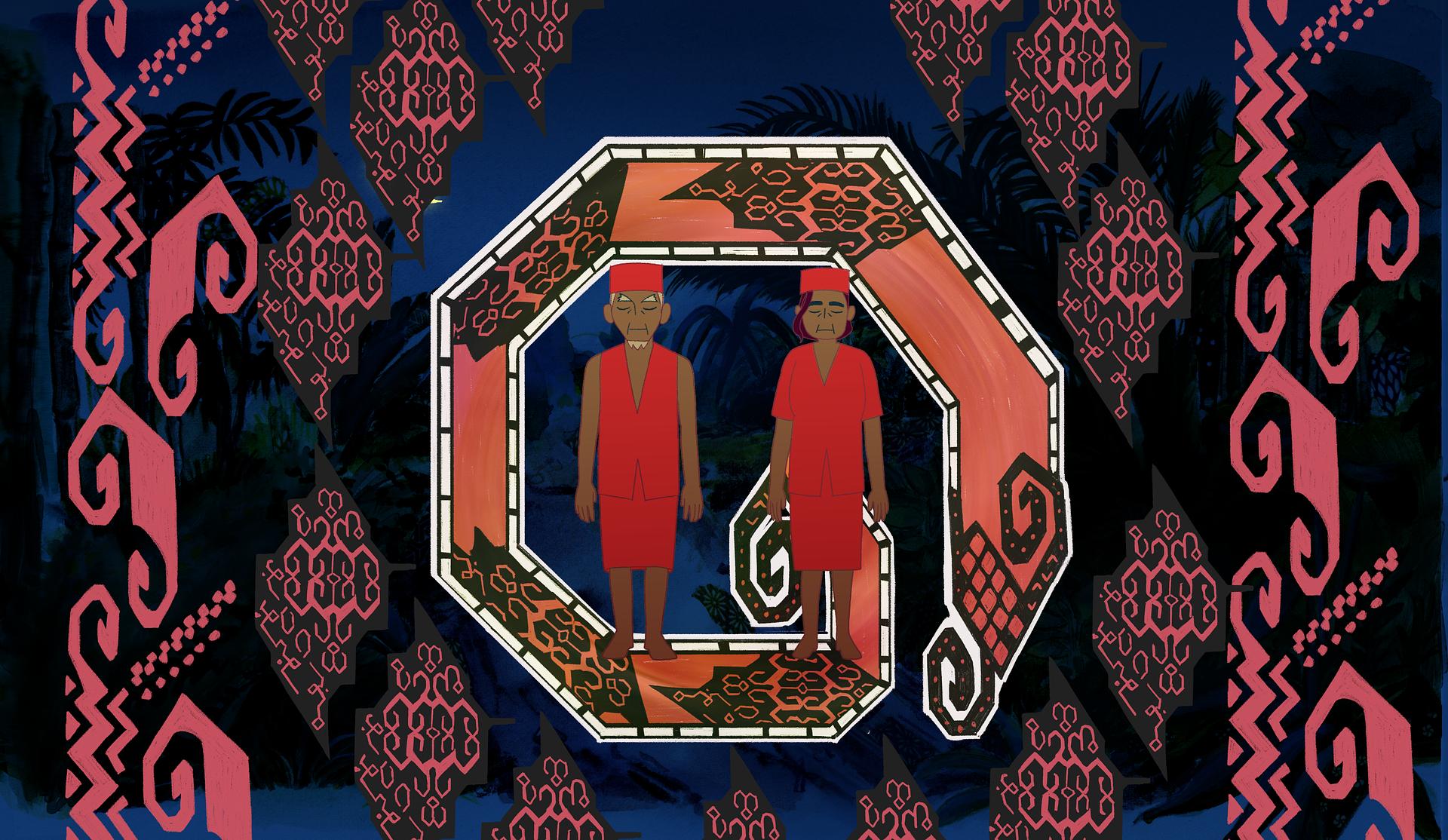
Traditional Dayak motifs in red and black were used to imagine Mekar Raya's snake ancestor Nabau. Illustration: Laura Nasir-Tamara.
Next Steps
In 2026, we will return to Mekar Raya to host another screening with community members, including the People's Conservation Summit scheduled for August in Bogor, Indonesia. We will also host excerpted screenings in Rotterdam; Los Angeles; and Climate Weeks in New York and Bangkok.